
The Ultimate Checklist for Securing Reliable Crane Rentals
Every successful lifting operation begins with a clear understanding of project requirements. Companies searching for crane rentals should carefully evaluate the weight, dimensions, and placement needs associated with the job before selecting equipment. Construction sites, industrial facilities, and commercial developments often involve different lifting challenges that require specific crane capabilities. Understanding the project scope helps ensure the selected crane can safely and efficiently handle the required workload. Careful planning also supports smoother scheduling and better coordination throughout the operation. Thorough project evaluation remains one of the most important steps when arranging professional lifting services.
Reviewing Equipment Options Through Capacity Assessments
Selecting the proper crane size is essential for maintaining safety and operational efficiency. Businesses seeking crane rentals should review equipment capacities carefully to ensure the crane aligns with the demands of the project site. According to Future Market Insights, the crane rental market is mostly driven by low-to-medium capacity units ranging from 10 to 100 tons, which are ideal for the spatial constraints and lifting requirements of residential and light commercial projects. Capacity assessments help prevent equipment limitations that may interfere with lifting operations or project timelines. Matching the crane’s lifting range to the job requirements supports safer and more efficient material handling. Proper equipment selection contributes to smoother workflow coordination throughout the project.
Assessing Operator Experience Through Professional Qualifications
Crane operations require specialized training and experience to maintain safe lifting practices in demanding environments. Companies arranging crane rentals should evaluate the qualifications and operational knowledge of crane operators before work begins. Experienced operators understand how to manage load stability, site positioning, and equipment movement while adapting to changing project conditions. Professional expertise helps reduce operational risks and supports better communication between lifting crews and project managers. Skilled operators also contribute to improved efficiency during material placement and transportation tasks. Qualified crane personnel play an essential role in maintaining organized and controlled job site operations.
Examining Safety Standards Through Equipment Inspections
Safety should remain a top priority during any crane operation. Businesses researching crane rentals should confirm that all equipment undergoes regular inspections and maintenance evaluations to support dependable performance. Cranes operating under heavy workloads require consistent monitoring to ensure structural components, cables, hydraulic systems, and lifting mechanisms remain in proper condition. Thorough inspections help identify wear or mechanical concerns before they affect job site operations. Strong safety standards contribute to smoother project execution and improved workplace conditions for crews operating near heavy equipment. Reliable equipment performance supports safer lifting operations across a variety of industries.
Reviewing Site Conditions Through Environmental Evaluations
Job site conditions can significantly influence crane selection and operational planning. Companies arranging crane rentals should evaluate terrain, overhead clearances, ground stability, and surrounding structures before scheduling equipment delivery. Tight urban spaces, uneven surfaces, and restricted access points may require specialized crane configurations or additional planning considerations. Environmental conditions such as wind exposure or limited maneuvering space can also affect lifting procedures. Careful site evaluation helps support safer crane positioning and improved operational efficiency throughout the project timeline. Understanding the work environment contributes to better overall lifting coordination.
Coordinating Scheduling Through Organized Project Timelines
Construction and industrial projects often operate under strict schedules that depend on reliable equipment availability. Businesses utilizing crane rentals should coordinate timelines carefully to ensure lifting operations align with project milestones and workflow demands. Delays in crane scheduling can affect material delivery, installation sequencing, and crew productivity across the entire site. Organized scheduling helps reduce downtime and supports smoother coordination between contractors, suppliers, and crane operators. Timely equipment availability contributes to improved operational efficiency and stronger project organization. Structured scheduling remains an important part of successful crane operations.
Evaluating Equipment Versatility Through Specialized Crane Features
Different lifting environments may require cranes equipped with specialized features to support unique project demands. Companies exploring crane rentals should review the versatility of available equipment based on site conditions and lifting objectives. Telescopic booms, all-terrain mobility, compact designs, and extended reach capabilities may improve operational flexibility in challenging environments. Specialized crane features help crews adapt to restricted spaces, varying load heights, and changing job site conditions more effectively. Versatile equipment contributes to smoother material handling and more efficient project execution. Proper feature evaluation helps ensure the crane aligns with the operational needs of the site.
Supporting Job Site Efficiency Through Reliable Equipment Access
Reliable access to lifting equipment plays a major role in maintaining productivity on construction and industrial sites. Businesses relying on crane rentals benefit from working with providers that maintain organized equipment availability and dependable scheduling coordination. Reliable equipment access helps reduce operational interruptions and allows projects to maintain steady progress during critical lifting phases. Efficient crane deployment also supports better communication between project managers and field crews throughout the operation. Consistent equipment availability contributes to smoother material handling and improved workflow management. Organized crane logistics support stronger overall project performance.
Improving Material Handling Through Professional Lift Planning
Proper lift planning helps improve both safety and efficiency during crane operations. Companies arranging crane rentals should work closely with lifting professionals to evaluate load paths, equipment positioning, and material handling procedures before operations begin. Professional planning helps crews identify potential obstacles and establish organized lifting strategies that support stable load movement. Well-structured lift coordination contributes to smoother project execution and reduced operational risks on active job sites. Detailed planning also supports better communication among operators, rigging teams, and construction personnel.
Managing Space Limitations Through Strategic Equipment Selection
Many modern construction projects involve space limitations that require careful crane placement and maneuvering. Businesses using crane rentals should consider how equipment size and mobility will affect access and operational efficiency on the site. Compact cranes or all-terrain units may provide greater flexibility in urban developments, industrial facilities, or residential construction areas with limited working space. Strategic equipment selection helps crews navigate confined environments while maintaining safe lifting capabilities. Efficient use of available space contributes to smoother project coordination and improved operational control. Proper crane placement supports safer and more organized job site activity.
Supporting Structural Projects Through Heavy Lifting Capabilities
Large-scale structural work often depends on dependable lifting equipment capable of handling substantial materials and equipment loads. Companies utilizing crane rentals for steel installation, roofing systems, HVAC placement, or concrete work should ensure lifting capacities align with project demands. Strong heavy-lifting capabilities support efficient material placement and help maintain construction schedules during demanding phases of development. Reliable cranes also contribute to safer handling of oversized materials that may be difficult to move through conventional equipment alone. Effective lifting support strengthens productivity across commercial and industrial construction operations.
Enhancing Communication Through Coordinated Project Support
Effective communication between crane operators, project managers, and field crews is essential for maintaining organized lifting operations. Businesses arranging crane rentals should prioritize providers that emphasize clear coordination throughout the project timeline. Communication helps crews manage load sequencing, equipment positioning, and operational adjustments more effectively during active lifting procedures. Strong coordination also supports faster response times when site conditions or scheduling needs change unexpectedly. Organized communication contributes to safer and more efficient crane operations across a wide range of project environments. Collaborative planning strengthens overall job site management.
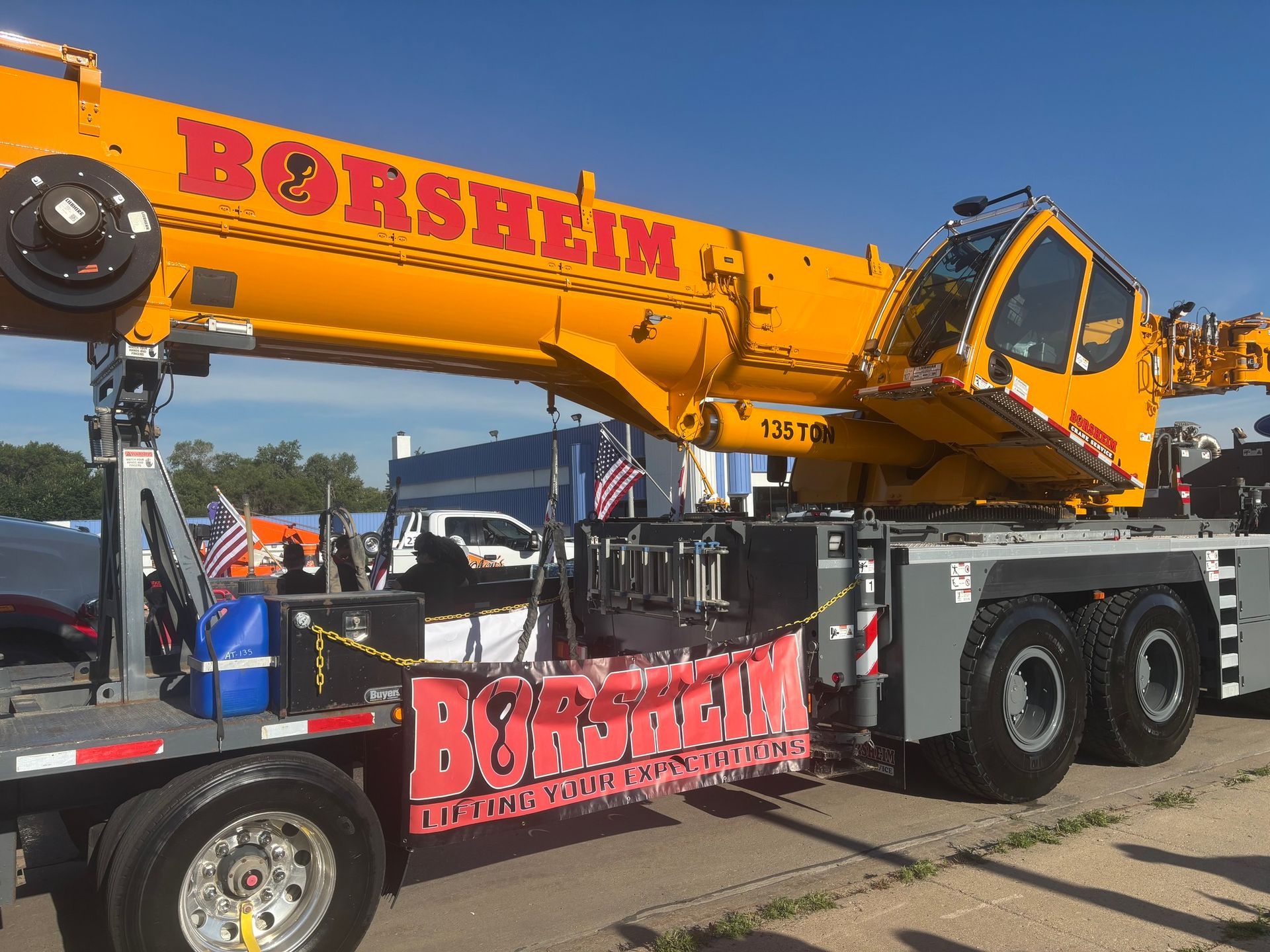
At Borsheim™ Crane Service LLC, we provide professional crane rentals designed to support safe, organized, and efficient lifting operations across a variety of industries and project types. Our team works closely with contractors, construction managers, and industrial crews to help coordinate lifting solutions that align with project requirements and site conditions. We focus on maintaining dependable equipment, experienced operators, and organized scheduling to support smooth project execution from start to finish. Whether your project involves structural steel placement, material handling, or commercial construction support, our crane services are designed to help maintain operational efficiency and workplace safety. Contact Borsheim™ Crane Service LLC today to learn more about our professional
crane rentals and lifting support solutions.


Share On: